 Seasons0–3 years
How to Dress Baby in Winter, From Newborn to Toddler
Onesie, one warm layer, snowsuit: what newborns and babies wear in freezing weather, in the stroller, carrier and bus.
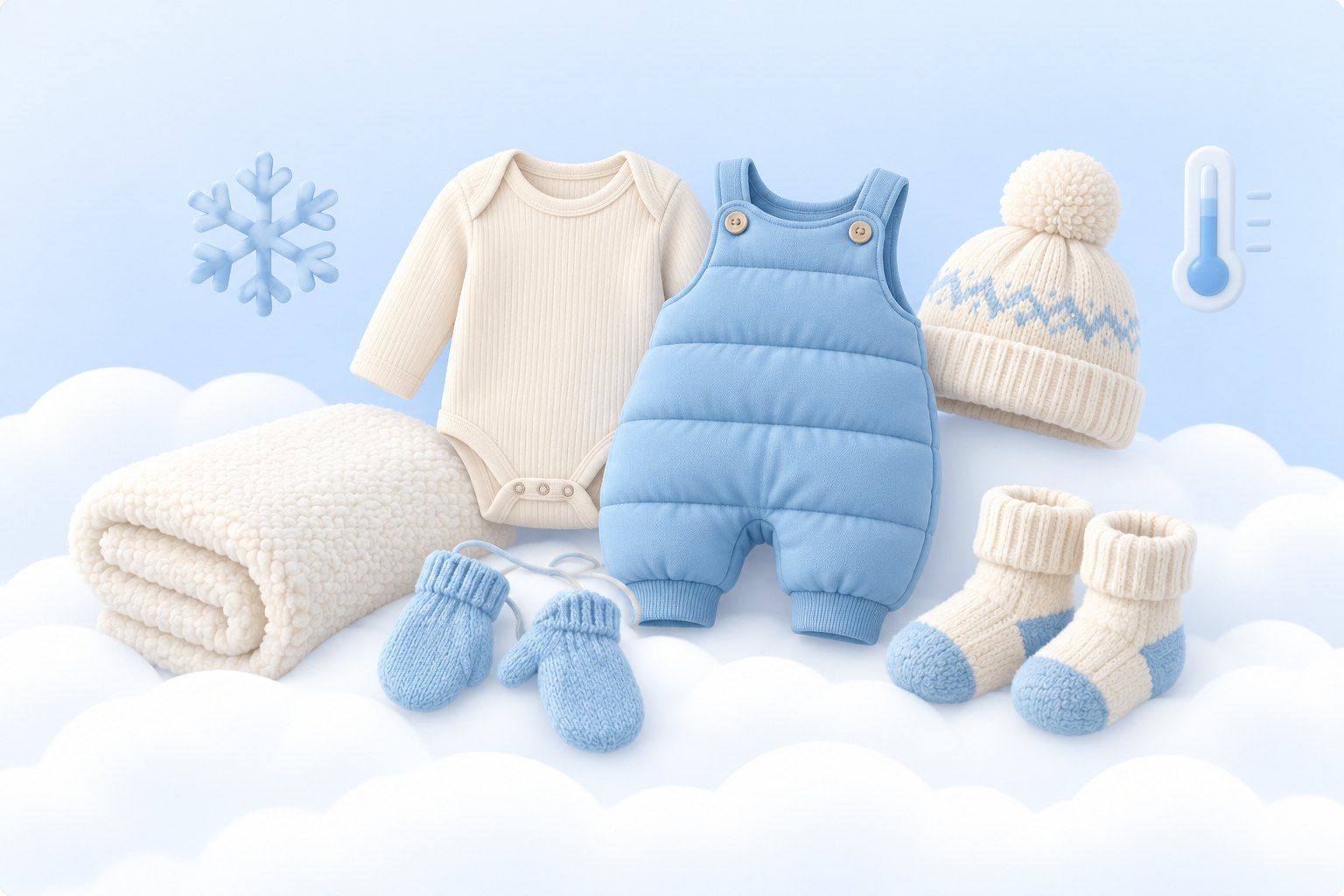
Knowing how to dress baby in winter isn't about piling on as many clothes as you can. Whether your winter baby was born in January, meets their first frost at five months or stomps through slush as a two-year-old, they need a onesie, one warm layer and a suit or coat on top, plus covered ears, hands and feet.
At a glance
The basic rule
Onesie, 1 layer, suit
Feels below 41 °F
Mittens, stroller footmuff
Below 32 °F
Balaclava under the hat
Heading inside
Hat off, suit unzipped
How to Dress Baby in Winter: Which Layers Do They Need?
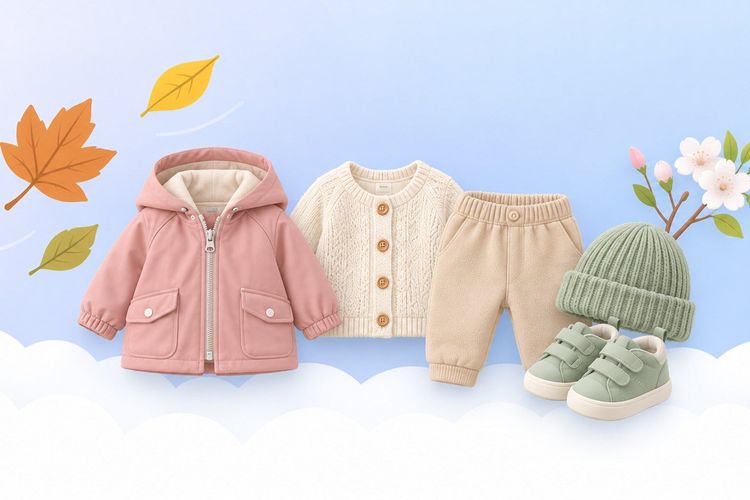
In winter your baby wears three layers: a onesie against the skin, exactly one warm layer (a cardigan for newborns, a sweater from 3 months) and a wool fleece suit on top. Add a hat and warm socks, and when it feels below 41 °F (5 °C), a wool onesie, mittens and a footmuff. Count layers, not pieces. Wool or wool-silk next to the skin keeps your baby warm and lets moisture escape.
What matters is the feels-like temperature, not the calendar. At 37 °F with a 12 mph wind, it feels like about 29 °F. In rain, snow or wind of 9 mph or more below 50 °F (10 °C), a softshell suit goes over the wool fleece suit, and the cardigan or sweater comes off. Where the table lists the snowsuit, it replaces both, and walkers get lined rain pants instead of snow pants. For showers, see taking your baby out in the rain.
| Feels like | Baby up to 5 months | Child from 18 months |
|---|---|---|
| 32–40 °F | Wool onesie, tights, cardigan or sweater, wool fleece suit, hat, mittens, warm socks, footmuff | Wool onesie, tights, sweater, winter coat, snow pants, hat, mittens, warm socks, winter boots |
| 23–31 °F | Same as above, but warm leggings instead of tights, balaclava under the hat | Wool fleece suit instead of sweater and tights, balaclava under the hat |
| below 23 °F | Snowsuit instead of the wool fleece suit, fold-over mitten and foot cuffs replace the mittens, short trips only | Same as 23–31 °F |
How to dress your baby for cold, freezing weather: 30-degree weather is the middle row, 20-degree weather the bottom one. From 6 to 17 months, the snowsuit goes into the footmuff below 32 °F.
Baby in the Stroller in Winter: Snowsuit or Footmuff?
Both, not either-or: down to 23 °F (−5 °C), a baby under 6 months rides in the wool fleece suit inside the footmuff. When it's colder, it's the snowsuit inside the footmuff: at 3 to 5 months only briefly and with frequent neck checks, and under 3 months you're better off staying in or keeping it short.
Never put a blanket, muslin or the footmuff over your baby's face or the stroller opening. Use the wind and rain cover only in rain or strong wind, with the vent open, and take it off right after. No hot-water bottle or heat pack in the stroller.
How to Dress a Newborn in Winter, and When to Stay In
Is it even okay to take such a tiny baby out in frost and wind?
Yes, well bundled, but within limits. Newborns can't shiver yet and lose heat faster. Dress your newborn as in the table above, with the cardigan as the only warm layer. Rule of thumb under 3 months: at 23 °F (−5 °C) or colder, or at 32 °F (0 °C) or colder with wind of 9 mph or more, stay inside or keep the trip short. Fog and drizzle aren't great outing weather for newborns either.
Babywearing in Winter: What Does Baby Wear in the Carrier?
In a carrier your body helps keep your baby warm, so they need one layer less on the torso. Legs, feet, head and hands still cool down fast, though. Up to 17 months, below 50 °F a carrier cover replaces the suit and footmuff: warm leggings, winter booties over wool socks, mittens and a hat, plus the balaclava when it's freezing. Keep the face clear and the chin off the chest. At 23 °F and colder the stroller is the better choice, and walkers ride in the stroller once it's freezing. At a feels-like 14 °F (−10 °C) or colder, never use the carrier.
BabyWear – Weather & Outfits
Dress your baby right: outfits for outdoors, indoors, and sleep, based on the weather.


Try free for 3 days
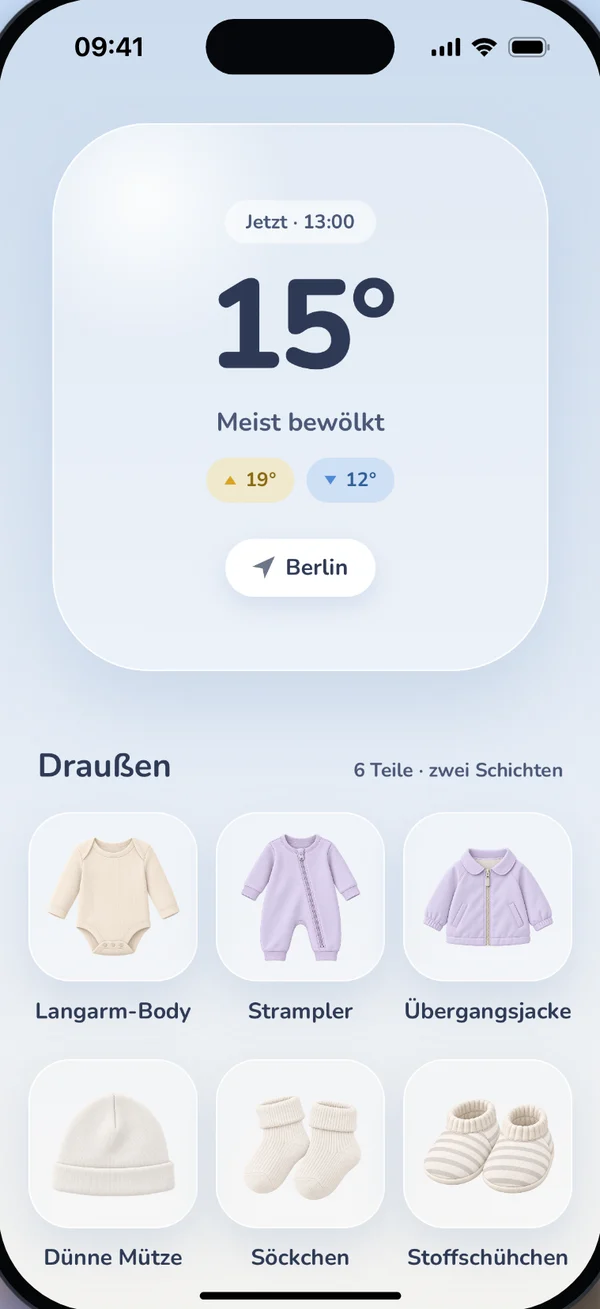
Is My Baby Too Cold? Signs to Watch for in Winter
To tell whether your baby is cold, feel the back of the neck or between the shoulder blades, not the hands or feet:
- Warm and dry: just right.
- Cold: too cold. Add a layer or head somewhere warm.
- Sweaty: too warm. Take off a layer or open the footmuff, then check again after a little while.
- Damp onesie: change it, because wetness chills fast even above 32 °F.
Cool hands are normal. The neck tells you whether it's right.
In a Finnish parent survey on outdoor naps, almost half the children had a sweaty neck at 32 °F. Red cheeks, fussiness or listlessness can point to overheating: take off a layer and offer something to drink. If your baby's skin is hot and dry or they seem dazed, call 911 right away.
When to act right away
White patches on the cheeks, nose, ears or fingers: get somewhere warm now, because cream doesn't prevent frostbite. If your baby feels cold, is limp, unusually quiet or won't feed, call 911 right away and warm them up slowly: no hot bath, no hot-water bottle.
From the Cold Into the Bus or Café: Does the Suit Come Off?
Yes, as soon as it gets warm: hat off, suit and footmuff unzipped or off, even if your baby is asleep. Otherwise heat builds up, and a sweaty baby gets chilled faster once you're back outside. The hat stays on only for naps outdoors in the stroller, lying flat and never at a feels-like 14 °F or colder.
Indoors your baby wears no hat and no mittens, not even as a newborn. From 3 months on, they wear no more layers than you do. The baby weather app BabyWear estimates the room temperature for your country and the season. More in dressing your baby at home.
In the car, the suit, snowsuit and footmuff don't go under the harness, and the hat and mittens come off. Tighten the harness snugly, then lay a blanket over the top. Winter car seat safety explains why.
How to Dress a Toddler for Winter Once They're Walking
From 18 months, walkers wear a winter coat, snow pants and winter boots instead of a snowsuit. “At most one layer more than you” only applies to a child who's sitting or lying still, and only below 59 °F (15 °C). During really wild play the sweater can come off; back in the stroller, it goes on again, along with the footmuff.
- A hat, not a hood: A hood can get caught on things. The hat covers the ears, and a scarf never goes around the neck.
- Wet means cold: Change wet mittens and socks right away.
- “I'm cold”: From about age 2, your child can tell you. Still check the neck.
Baby Has a Cold in Winter: Go Out? Bundle Up More?
Whether to go out with a baby who has a cold is a question for your pediatrician. If your baby has a cold or a fever, don't dress them warmer than usual or bundle them up extra, not at night either. Feel the neck to check. Get medical advice right away if your baby is under 3 months with a temperature of 100.4 °F (38 °C) or higher, or 3 to 6 months with 102 °F (39 °C) or higher.
Winter Nights: Warmth From the Room, Not From a Hat
Choose the sleep sack by the room, not the season. On cold winter nights, the research puts bedrooms in Germany at about 61–63 °F (16–17 °C). That calls for a 2.5 TOG winter sleep sack (TOG is the warmth rating) over a long-sleeve onesie and pajamas. On mild winter days it's more like 64 °F (18 °C), and 1.0 TOG is enough. Measure at the crib, since your home can differ by about 5 °F (3 °C). All levels are in sleep sack TOG by room temperature.
BabyWear – Weather & Outfits
Dress your baby right: outfits for outdoors, indoors, and sleep, based on the weather.
Try free for 3 days
Extra warmth comes from the room or the sleep sack, never from a hat, socks, a blanket or a hot-water bottle. Keep the crib away from the radiator or heater, and at night heat the room to no more than 68 °F (20 °C).
Frequently asked questions
At a feels-like 14 °F (−10 °C) or colder, all kids are better off inside, and with wind of 8 mph or more, already at 23 °F (−5 °C) on the thermometer. Under 3 months, the line is 23 °F or colder, or 32 °F or colder with wind of 9 mph or more: stay inside or keep it short.
This article is a guide and doesn't replace medical advice. If you're unsure or your baby is sick, ask your pediatrician or midwife. Sources: BIÖG 2025, NHS 2025, The Lullaby Trust 2026, 1177 Vårdguiden 2022, Canadian Paediatric Society 2023, American Academy of Pediatrics 2025.