 Sleep0–3 years
Sleep Sack TOG Chart: How to Dress Baby for Sleep by Room Temperature
The TOG chart made simple: from 0.5 in a warm room to 2.5 in a cool one, and what your baby wears under it at night.
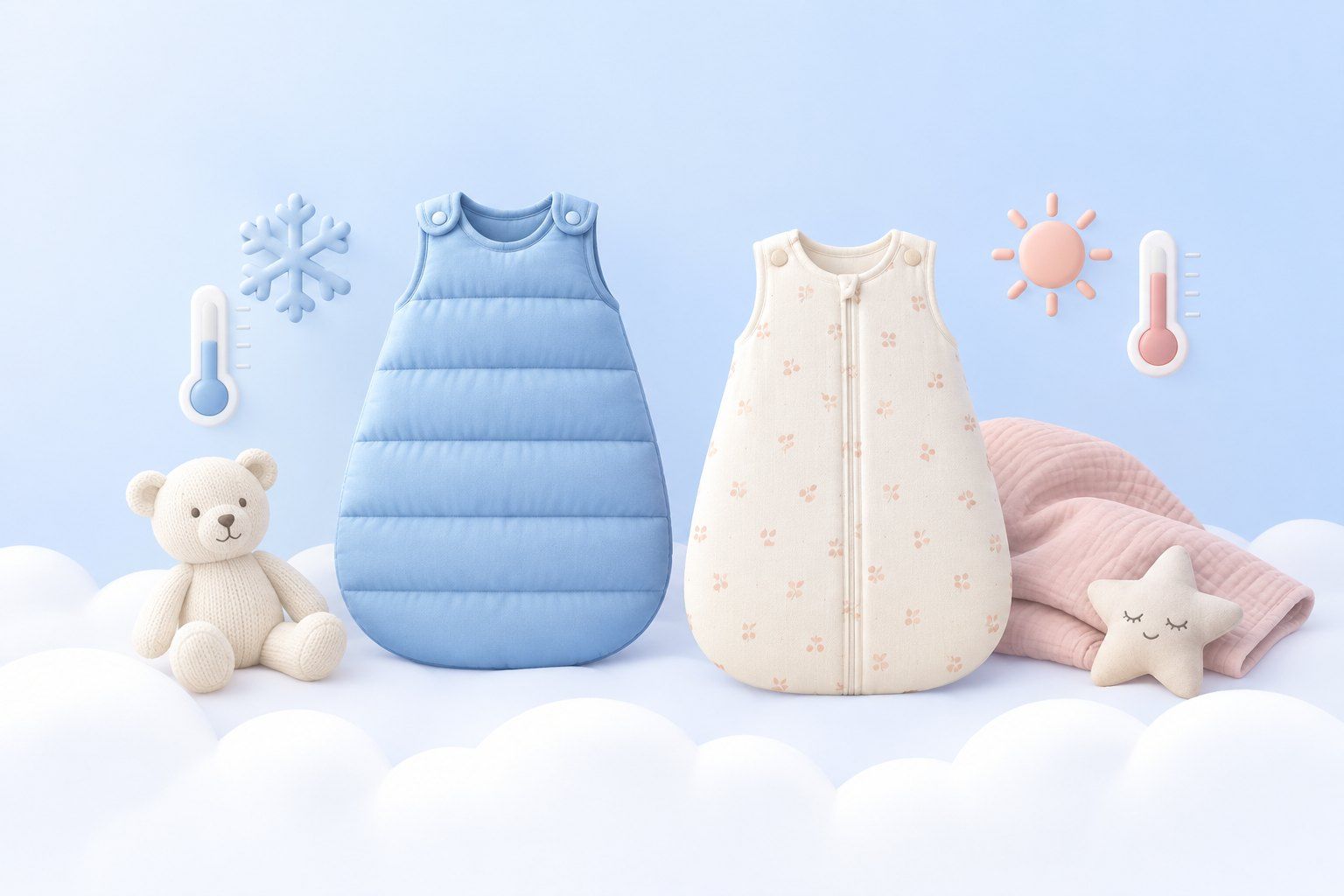
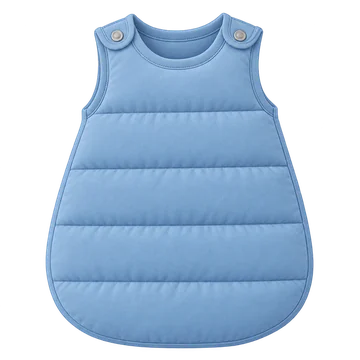
What TOG sleep sack for what temperature? With a sleep sack, the temperature in the bedroom decides, not the weather, the season or your baby's age. TOG is the warmth rating of a sleep sack (also called a wearable blanket): the higher the number, the warmer. Below you'll find the sleep sack TOG chart in °F, what your baby wears under it at night and how a quick feel of the neck tells you if it's right.
At a glance
61–63 °F
2.5 TOG, with pajamas
64–67 °F
1.0 TOG, with pajamas
68–74 °F
1.0 TOG, short-sleeve onesie
75 °F and up
0.5 TOG, onesie or diaper
What's the best room temperature for baby sleep?
Ideally, the bedroom sits at 61–68 °F (16–20 °C). Germany and Austria recommend 61–64 °F (16–18 °C), and 64 °F (18 °C) falls within every recommendation. There's no official TOG chart anywhere, not even in the UK: the levels below come from manufacturers' charts.
Put a thermometer by the crib, not in the hallway. An estimate can be off by about 5 °F (3 °C) for any given home, and the room cools down overnight: by a good 7 °F (4 °C) in a 1989 British winter study, probably less in today's better-insulated homes. In BabyWear, the baby weather app, you enter the measured temperature under Sleep and see the TOG rating and what goes underneath.
When it's 43 °F (6 °C) in the morning, you might reach for the winter sleep sack, but a heated bedroom at 70 °F (21 °C) needs only a 1.0 TOG sleep sack, even in January. Summer, mid-season and winter sleep sack here stand for 0.5, 1.0 and 2.5 TOG; brands often call them something else. Go by the label.
The sleep sack follows the room, not the calendar.
Sleep sack TOG chart: what TOG for what room temperature?
| Room | Sleep sack | Underneath |
|---|---|---|
| 57–60 °F (14–15 °C) | 2.5 TOG | Long-sleeve onesie, pajamas, warm up the room |
| 61–63 °F (16–17 °C) | 2.5 TOG | Long-sleeve onesie, pajamas |
| 64–67 °F (18–19 °C) | 1.0 TOG | Long-sleeve onesie, pajamas |
| 68–74 °F (20–23 °C) | 1.0 TOG | Short-sleeve onesie |
| 75–76 °F (24 °C) | 0.5 TOG | Short-sleeve onesie |
| 77–80 °F (25–26 °C) | 0.5 TOG | Sleeveless onesie |
| 81 °F and up (27 °C+) | 0.5 TOG | Diaper |
Baby sleep temperature chart for sleep sacks from 0 to 3 years, at night and for naps. Below 61 °F (16 °C), the room is cooler than recommended: warm it up to 61–68 °F (16–20 °C) instead of adding clothes or covers.
What should baby wear under a sleep sack at night?
How to dress baby for sleep comes down to two pieces at most: a onesie and, only up to 67 °F (19 °C), one warming layer, meaning pajamas or a footie. From 68 °F (20 °C), the onesie alone is enough; from 81 °F (27 °C), just the diaper. If all you have is a 3.5 TOG sleep sack, only a long-sleeve onesie goes under it at 61–63 °F (16–17 °C). From 64 °F (18 °C), it's too warm. If your baby sleeps in your bed, your body adds warmth: one layer less, their own sleep sack, your blanket out of the way. The safest place to sleep is their own crib in your bedroom.
- Always on the back: for every sleep in the first year, naps included.
- No second warming layer: no cardigan, no sweater, no tights, no leggings.
- No socks: footed pajamas keep the feet warm.
- No hat, no mittens: not even for newborns. Your baby releases heat through the head, and a hat can slip over the face.
- No blanket, no second sleep sack: two sleep sacks are warmer than their TOG ratings added together would suggest.
- No heat source: no hot water bottle, no heating pad, no microwavable heat pack. Keep the crib away from the heater, the window and direct sun.
- Nothing loose: no pillow, no bumper, no stuffed animal, no bib and no amber necklace or pacifier clip in the crib.
Extra warmth comes from the room or the sleep sack, never from a hat, socks or a blanket.
1.0 vs 2.5 TOG at 63 or 64 °F: what to do between two levels?
Plenty of bedrooms land right here in fall and winter: the thermostat turned down for the night, a window cracked open. At 63 °F (17 °C), it's the 2.5 TOG winter sleep sack; at 64 °F (18 °C), the 1.0 TOG mid-season sleep sack, each over a long-sleeve onesie and pajamas.
If you're unsure, go with the thinner sleep sack over a long-sleeve onesie and pajamas, and feel the neck later. If the neck feels cool or the room drops below 64 °F (18 °C) overnight, the 2.5 TOG sleep sack is the right one, because too cold isn't good either.
BabyWear – Weather & Outfits
Dress your baby right: outfits for outdoors, indoors, and sleep, based on the weather.


Try free for 3 days
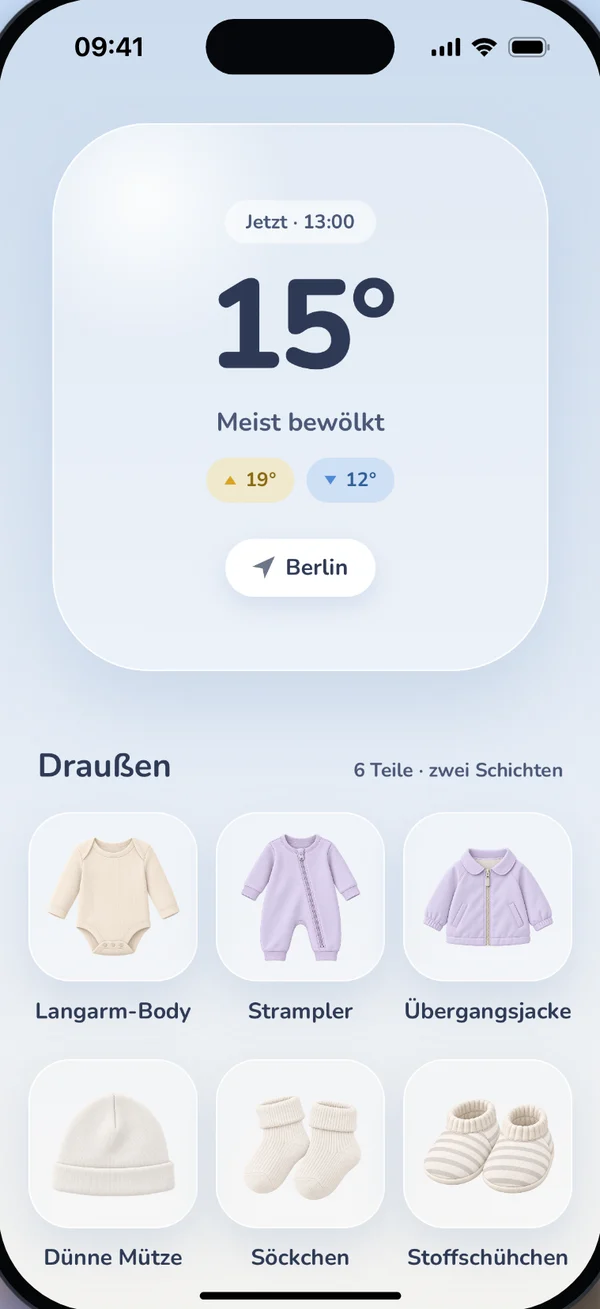
Baby too warm or too cold at night? The neck check
Feel the back of the neck or between the shoulder blades. Warm and dry means it's just right. Cool hands and feet are normal.
- Too warm: sweaty neck, damp hair or red cheeks. Take off a layer or switch to the lighter sleep sack.
- Too cold: cool neck. Add the pajamas, and below 64 °F (18 °C) the warmer sleep sack. Above 68 °F (20 °C), never more than 1.0 TOG.
It's fine to change your baby while they're asleep. A little cooler beats too warm: a baby who's cold wakes up and cries, an overheated one often sleeps right through.
What should baby wear to sleep in winter, and in summer?
If your baby was born in winter, your gut says: more. But even when it's freezing outside, only the room counts: at 61–63 °F (16–17 °C), a 2.5 TOG sleep sack over a long-sleeve onesie and pajamas is enough, nothing more. If your baby gets cold easily, that changes nothing under 6 months; after that, the most you'd change is swapping the cotton onesie for a wool one. For daytime outside: how to dress baby in winter.
If the bedroom doesn't cool below 79 °F (26 °C) in the height of summer, the summer sleep sack goes over a sleeveless onesie, and from 81 °F (27 °C) over just a diaper. From 75 °F (24 °C), the night counts as too warm: keep the blinds closed during the day, air the room out at night, sleep in the coolest room, offer the breast or bottle more often, no water under 6 months. Never point a fan at your baby, and keep it out of reach. More on this: how to dress baby in hot weather.
When to start a sleep sack, and what size fits?
From birth, in the size the manufacturer gives for your baby's weight and length; for preemies, as soon as the smallest size fits. For newborns that's 50 or 56 cm (about 20 or 22 in); a 70 cm size is too big. An adult finger should fit between neck and fabric, the armholes are snug so your baby can't slip down inside, and there's no hood. Never buy one to grow into.
Germany's public health institute BIOEG advises against swaddling for sleep. If you do swaddle: a thin wrap, back sleeping only, hips loose, stop at the first attempt to roll, at 3 months at the latest. Never put a swaddled baby in a sleep sack or in your bed: that gets too warm.
Baby has a cold: do they need a warmer sleep sack?
No. If your baby has a cold or a slightly raised temperature, they get the sleep sack that matches the room. No extra layer, no blanket, no hat, not even in winter: clothes that are too warm can raise body temperature on their own. Don't strip them down to the diaper either: dress them as usual and feel the neck more often. Never swaddle a baby with a fever.
Fever is body temperature
The chart is about the room. Get medical advice right away if your baby is under 3 months with 100.4 °F (38 °C) or higher, or 3 to 6 months with 102.2 °F (39 °C) or higher. Hot, dry skin, drowsiness, or if they feel cold, floppy or unusually quiet: call 911 right away.
Naps and toddlers: do the same rules apply?
Yes, naps follow the nighttime rules. The room is often warmer during the day, so measure there too, and take off the cardigan, tights and socks from earlier. If your baby falls asleep in the stroller, the hat, snowsuit and footmuff come off as soon as you're inside, and you lay them flat in the crib. What they wear awake indoors: ideal room temperature for baby.
BabyWear – Weather & Outfits
Dress your baby right: outfits for outdoors, indoors, and sleep, based on the weather.
Try free for 3 days
The sleep sack stays until at least age 2 and for as long as your child sleeps in a crib. Once they climb out, it's time for a low bed. If they're already walking, a sleep sack with foot openings works at 64–74 °F (18–23 °C): cotton rather than fleece, and at 64–67 °F (18–19 °C) with footed pajamas instead of socks. If your child wakes up with damp hair, leave off one layer, usually the pajamas; only from 72 °F (22 °C) switch to the thinner sleep sack instead, never both. Below 61 °F (16 °C), don't dress them any lighter.
Frequently asked questions
It's the warmth rating of a sleep sack: the higher, the warmer. This chart uses 0.5, 1.0, 2.5 and 3.5 TOG; some brands also use other levels, like 0.2 TOG.
This article offers guidance, not medical advice. If your baby has a fever or you're worried about them, ask your pediatrician or midwife. Sources: BIOEG (2025), The Lullaby Trust (2026), NHS (2025), GEPS (2008), Red Nose Australia (2025), WHO Europe (2011) and manufacturer charts (2026).